Monday, January 27, 2020

A Tribute to Kobe Bryant


Kobe Bryant, NBA superstar and future Hall of Famer, is dead at 41


(CNN)It's hard to believe NBA superstar Kobe Bryant, whose prodigious talent and win-at-all-costs spirit made him one of the most famous and decorated athletes in history, is gone.
He was the rare celebrity who didn't need a last name. Oprah. LeBron. Beyonce. Kobe. Everyone knew who you were talking about.
Still youthful at 41, Bryant -- who died in a helicopter crash Sunday in California -- looked like he could suit up and drop 30 points on a rival NBA team. It doesn't seem that long ago that he was scoring 60 points in his final NBA game, soaking up the cheers of Los Angeles Lakers fans who worshiped him for two decades as one of the city's favorite sons.
    After his 20-year NBA career -- all with the Lakers -- Bryant is all but assured of being a first-ballot inductee into the Naismith Memorial Basketball Hall of Fame later this year.
    "He was a fierce competitor, one of the greats of the game and a creative force," said fellow NBA icon Michael Jordan.
    An 18-time All-Star, Bryant was known for his remarkable scoring ability -- his turnaround jumper was nearly unstoppable -- and his championship pedigree. He teamed with fellow All-Star Shaquille O'Neal to win three consecutive NBA titles from 2000 to 2002 and later won two more rings, in 2009 and 2010.
    Known as the Black Mamba -- a nickname he gave himself -- Bryant twice led the NBA in scoring and won the league's Most Valuable Player award in 2008.
    Bryant's daughter Gianna, 13, was with her father on the helicopter and was also killed in the crash, a source with knowledge of the situation told CNN.
    "Kobe was so much more than an athlete, he was a family man. That was what we had most in common," O'Neal wrote on Twitter Sunday. "We love our families. Whenever we got together I would hug his children like they were my own and he would embrace my kids like they were his."
    "The NBA family is devastated by the tragic passing of Kobe Bryant and his daughter, Gianna," said NBA Commissioner Adam Silver in a statement.
    "For 20 seasons, Kobe showed us what is possible when remarkable talent blends with an absolute devotion to winning. He was one of the most extraordinary players in the history of our game with accomplishments that are legendary ... But he will be remembered most for inspiring people around the world to pick up a basketball and compete to the very best of their ability."

    He entered the NBA at age 17

    Bryant was born on August 23, 1978, in Philadelphia, Pennsylvania. His parents, Joe and Pam Bryant, gave him the namesake after seeing a type of steak on a restaurant menu. Kobe beef is from a species of cattle, Wagyu, raised in the Kobe region of Japan.
    He lived in Italy from the age of six to 13 while his father played professional basketball, and he spoke Italian fluently. In one of his final interviews before he died, Bryant told CNN how he developed a love of soccer in Italy but also witnessed racism before moving back to the United States.
    "When I was growing up in Italy, I've obviously witnessed it firsthand going to certain soccer matches and things of that nature," Bryant told CNN's Andy Scholes. "My parents have taught me and educated me on how to deal with those sorts of things."
    Bryant played high school basketball at Lower Merion in Pennsylvania.
    "This is a difficult day for everyone in our school community," said Amy Buckman, a spokeswoman for Lower Merion School District.
    "Mr. Bryant's connection to Lower Merion High School, where he played basketball prior to joining the NBA, has raised the profile of our high school and our district throughout the world. Our school community will always be grateful for his ongoing generosity to his alma mater, including his dedication of our Kobe Bryant gymnasium and his support of our girls and boys basketball teams."
    Bryant went straight from high school to the NBA, drafted by the Charlotte Hornets with the 13th overall pick of the 1996 draft, making him the youngest NBA player in history at age 17. Bryant was then traded to the Los Angeles Lakers for veteran center Vlade Divac.
    He soon became one of the most decorated players in NBA history and also won two Olympic gold medals for USA men's basketball, in 2008 and 2012.
    Off the court his dazzling smile sold everything from Nike shoes to McDonald's hamburgers.
    There was controversy, however, when Bryant was accused of sexual assaulting a 19-year-old Colorado hotel worker in 2003. Bryant insisted the encounter was consensual. The criminal sexual assault charge was dropped in 2004, and the accuser agreed to settle her civil lawsuit against Bryant in 2005.

    LeBron James: 'Kobe is a legend, that's for damn sure'

    At 6 feet, 6 inches, Bryant could run the point or play shooting guard, even though his position was small forward.
    One of the most memorable games in NBA history came on January 22, 2006, when Bryant scored 81 points in a Lakers' 122-104 win over Toronto. Only Wilt Chamberlain's 100-point game in 1962 tops this performance.
    And in his final game of his career in 2016, the Black Mamba did it his way, dropping 60 points -- on 50 shots -- in a Lakers win against the Utah Jazz at a frenzied Staples Center in Los Angeles.
    Bryant finished his NBA career with 33,643 points. A day before he died, he was passed by another Laker and superstar, LeBron James, on the league's all-time scoring list. James accomplished the feat in -- of all places -- Philadelphia, against the 76ers.
    Bryant took to Twitter after James passed him, writing, "Continuing to move the game forward @KingJames. Much respect my brother."
    James, who had "Mamba 4 Life" and "8/24 KB" in gold marker on his sneakers before Saturday's game, talked after the game about Bryant's influence on him.
    "The story is just too much," James said Saturday night. "It doesn't make sense. ... Now I'm here in a Lakers uniform, in Philadelphia, where he's from... it's surreal."
    James -- who, like Bryant entered the NBA straight out of high school -- said Bryant was someone he looked up to when he was in grade school and high school.
    "Seeing him come straight out of high school, he is someone that I used as inspiration," James said. "It was like, wow. Seeing a kid, 17 years old, come into the NBA and trying to make an impact on a franchise, I used it as motivation.
    "He helped me before he even knew of me because of what he was able to do. So, just to be able to, at this point of my career, to share the same jersey that he wore, be with this historical franchise and just represent the purple and gold, it's very humbling and it's dope.
    "Kobe's a legend, that's for damn sure."
    Another Lakers legend, Magic Johnson, posted a series of tweets on the loss of Bryant, including one showing a picture of Bryant with his two different jersey numbers -- 8 and 24 -- being retired.
    "Kobe and I shared so many special conversations about life and basketball," Johnson wrote in one tweet. "We had so much in common off the court. I used to love talking to him about Lakers basketball, being fathers and husbands and how much we loved Italy. I will miss those conversations and him so much."

    He coached his daughter, Gianna

    Bryant married wife Vanessa in 2001. They had four daughters: Natalia (born in 2003), Gianna (2006), Bianka (2016) and Capri (2019).
    He and his daughter Gianna were expected at the Mamba Sports Academy in Thousand Oaks for a basketball game scheduled for Sunday afternoon. Bryant was to coach his daughter's team in the game.
    Bryant said that he had watched little basketball after retiring -- in 2018, he won an Oscar for best animated short for "Dear Basketball," which was based on a poem he wrote -- but Gianna's love of the game sparked his interest in coaching her team.
    The two were seen together at numerous NBA games recently, and videos of Gianna's basketball skills went viral despite her just being 13.
    Bryant described Gianna -- who had WNBA aspirations -- as "hellbent" on going to the University of Connecticut, the alma mater of Diana Taurasi and Maya Moore, two players Bryant recently told CNN "could play in the NBA right now."
      "The best thing that happens is when we go out and fans will come up to me -- and she'll be standing next to me -- and be like, 'Hey you've got to have a boy. You and V gotta have a boy and then have somebody carry on the tradition, the legacy,'" Bryant once said in an interview with ABC's Jimmy Kimmel.
      But, Bryant added, Gianna would then pipe up, saying, "I got this."

      Tuesday, July 23, 2019

      Dangers of Face App


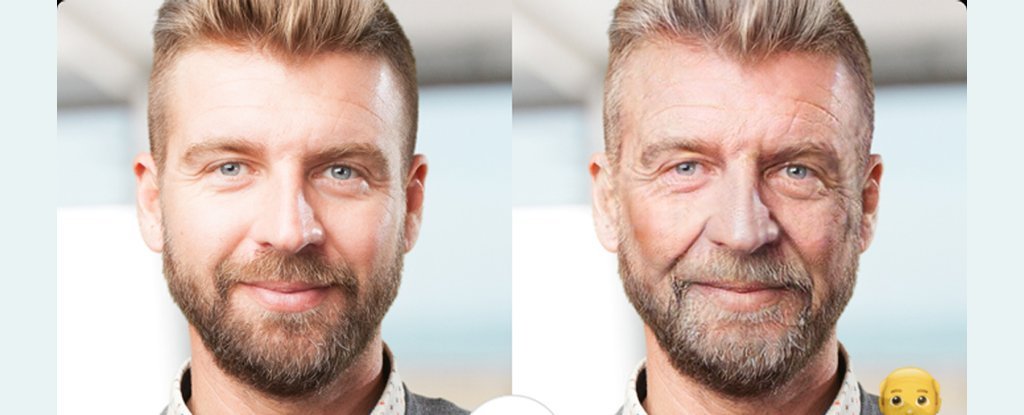
      Viral photo app FaceApp has taken the world by storm. Launched in 2017, the app has recently enjoyed mass popularity due largely to Hollywood celebrities posting their humorous edited pictures online.
      FaceApp uses “neural network” artificial intelligence technology to alter people’s faces with various filters. Users simply take or upload a photo from their phone and the app’s algorithms do the rest. You can make yourself look younger or older, swap your gender, or transform your expression.
      The ageing filter is easily the most popular, with Drake, Hilary Duff, Gordon Ramsay, and LeBron James among the celebrities who showcased their future faces on social media.


      Last week, the app was in the headlines for all the wrong reasons, with keen-eyed observers pointing out that the app’s terms of use give its Russian parent company, Wireless Lab, a very broad, global and lifelong licence to use the images.
      In short, once you sign up and use the app, the company can do pretty much whatever it likes with your photos. It could plaster a wrinkled version of your face across a billboard, website or the side of a skyscraper, and you would have no legal recourse.
      Of course, as experts have correctly pointed out, this is extremely unlikely to happen. Russia’s only interest in your photo data would be for facial recognition software development. Wireless Lab has also publicly stated that most photos are deleted within 48 hours of upload and no information is sent to Russia, but rather is stored temporarily on the company’s American servers.
      Other hidden dangers in the fine print
      More concerning, however, is the range of other disturbing conditions users unwittingly sign up to with FaceApp. The terms of use comprise a legally binding contract, yet research tells us that virtually no one ever reads the fine print.
      This is worrying, given that section 15 of FaceApp’s terms all but bans you from taking legal action against the company. You are only permitted to lodge small claims (up to certain limits) or seek specific court orders. You are otherwise required to resolve all legal disputes through confidential arbitration held in California.
      Thankfully, you can opt out of this provision – but you only have 30 days from registration to do so, meaning most of the app’s 100 million existing users are already too late.
      For those who have recently bought into the hype, the clock is ticking. You can opt out by sending written notification to:
      Wireless Lab OOO
      16 Avtovskaya 401
      Saint-Petersburg, 198096, Russia
      You must include your full name and indicate your clear intent to opt out of binding arbitration. If you do this, standard Californian law applies and you retain your legal right to sue if you want.
      If you downloaded FaceApp within the past week and you’re based in Australia, you’ll want to act quickly, given that letters take up to 14 business days to reach Russia via international post.
      Section 17 of the terms is also concerning. This clause gives Wireless Lab the right to change the terms at any time, and that the company “may” attempt to notify users but will otherwise simply post the updated terms online.
      In theory, there would be nothing to stop the company suddenly imposing a usage charge, and the only way to find out would be to continuously check the terms of use for updates, or your App Store-linked bank account for withdrawals.
      https://images.theconversation.com/files/285058/original/file-20190722-116543-3t7gnz.jpg?ixlib=rb-1.1.0&q=45&auto=format&w=754&fit=clip

      You might be giving away more than your face. Shutterstock.com

      Section 10 also deserves a mention. It states that you will “indemnify, defend, and hold harmless” FaceApp and its “officers, directors, agents, partners and employees” from “any loss, liability, claim, demand, damages, expenses or costs” relating to your use of the app.
      Basically, you cannot sue them for any loss or injury you suffer through the app (such as damaged reputation or embarrassment caused by Wireless Lab using your photos). It also means you agree to cover all legal fees for third-party claims against FaceApp arising from your use of the app, yet you surrender all control over the legal action.
      In stark terms, this means you effectively can’t sue FaceApp, and if anyone else tries, you’re picking up the bill.
      Is it worth it?
      FaceApp is undeniably fun, and is currently the most popular free app in Australia, ahead of Instagram and YouTube. Downloads of the app to US iPhones have increased by 561% in the past month.


      Any playful app that spreads joy can be a good thing. It is crucial, however, that users know what they are signing up for, otherwise many of their legal rights will vanish and their legal exposure will be extraordinary.
      As if wrinkled skin and grey hair weren’t bad enough.

      https://www.sciencealert.com/scared-of-faceapp-stealing-your-data-it-s-not-the-creepiest-part-of-their-fine-print

      Record haul of Elephant Ivory and Pangolin Scales


      Record haul of elephant ivory seized in Singapore, with pangolin scales, worth over $66m in total

      JUL 23, 2019, 10:52 AM SGT
      UPDATED
      JUL 23, 2019, 6:43 PM


      SINGAPORE - A record 8.8 tonnes of elephant ivory was seized from three containers on Sunday night (July 21) in what is believed to be one of  the largest seizures that the world has seen in recent years.
      The ivory is estimated to have come from nearly 300 African elephants. Just three months earlier in April, Singapore seized 177kg of cut-up and carved elephant ivory.
      Alongside the record ivory haul, 11.9 tonnes of pangolin scales were also confiscated in the operation. It was the third shipment to be intercepted this year, said the National Parks Board (NParks), Singapore Customs and the Immigration and Checkpoints Authority (ICA) in a joint statement.
      The containers, which were en route from the Democratic Republic of the Congo to Vietnam, were declared as containing "timber" but were found to contain pangolin scales estimated to be worth about $48.6 million, alongside $17.6 million worth of elephant ivory, when they were inspected by the authorities.
      In April, two large shipments of pangolin scales - both bound for Vietnam from Nigeria - were intercepted by the local authorities within a week of each other. They were found to contain 12.9 tonnes and 12.7 tonnes of scales respectively.
      With this seizure, Singapore has seized a total of 37.5 tonnes of pangolin scales since April.
      The shipments were believed to be two of the largest single hauls the world has seen in recent years. The last one on record was in China, where 11.9 tonnes of scales were seized in 2017.


      Pangolin scales and elephant ivory seized by Singapore authorities, pictured on July 23, 2019. ST PHOTO: JASON QUAH

      An estimated 2,000 giant pangolins (Smutsia gigantea) are believed to have been killed for the scales confiscated in the latest shipment.
      The agencies said  China's General Administration of Customs had shared information that enabled the successful seizure at Singapore's Pasir Panjang Export Inspection Station.
      "The Singapore Government adopts a zero-tolerance stance on the use of Singapore as a conduit to smuggle endangered species and their parts and derivatives. Our agencies will continue to collaborate and maintain vigilance to tackle the illegal wildlife trade," they added.
      Native to Asia and Africa, the ant-eating pangolin is the only mammal covered in scales and curls into a ball to defend itself from predators.
      Pangolin scales, which are made of keratin, are in demand in Asia for use in traditional Chinese medicine despite there being no proven medicinal benefit from their use. Pangolin meat is also considered a delicacy in some cultures.


      Singapore has seized a total of 37.5 tonnes of pangolin scales since April. ST PHOTO: JASON QUAH

      Experts who spoke to The Straits Times about the earlier seizures had said the large quantities of pangolins involved in the shipments pointed strongly to the involvement of criminal networks.
      Ms Bridget Connelly, an analyst conducting research on wildlife trafficking with C4ADS - a non-profit based in the United States - told The Straits Times that only a trafficker with a significant source of funds can bear the financial risk of consolidating the animal parts from poachers and middlemen, and exporting them.
      She added: "Wildlife trafficking is most efficient and cost-effective when it is done at scale. The poacher isn't going to have the means to ship the product to Asia, nor is the middleman, who may collect from several poachers."
      The pangolin is believed to be the world's most trafficked mammal. There are eight species of pangolin, all of which are considered threatened with extinction on the International Union for Conservation of Nature's (IUCN) Red List of Threatened Species.
      According to experts, over a million pangolins were taken from the wild between 2000 and 2013. Current populations of pangolins in Asia are thought to be low enough that traffickers have turned to African regions to feed the demand.
      The Singapore authorities also intercepted the shipping of pangolin scales in Singapore in 2015 and 2016.
      Ms Connelly pointed out that a key problem in stopping illegal wildlife trade was the lack of detection or, when detection occurred, the lack of sufficient penalties to deter traffickers.
      "Often, even if wildlife traders are arrested, they will have minimal sentences or relatively small fines. Because of the high reward and low risk, the wildlife trade has continued to flourish," she said.
      Singapore is a signatory to the Convention on International Trade in Endangered Species of Wild Fauna and Flora (Cites).
      Under local laws - the Endangered Species (Import & Export) Act - the penalty for the illegal import, export and re-export of wildlife is a fine of up to $500,000 and may include two years' imprisonment.
      Earlier this month, an international operation involving the police in 109 countries saw thousands of wild animals seized in a crackdown on illegal wildlife trade. Operation Thunderball, based in Singapore, was the third such Interpol mission in recent years aimed at transnational crime networks.
      Ms Connelly said Singapore plays a significant role in international maritime trade routes and is heavily exposed to networks using its port to traffic wildlife products.
      She said: "Because wildlife traffickers operate across jurisdictions, collaboration among international, regional and local actors at every stage in the supply chain is crucial to understanding and effectively disrupting the networks.
      "When a seizure is made, it is important that consignee and consignor information is shared with the authorities in both the origin and destination jurisdictions as to more effectively prevent such shipments from being successful in the future."
      The agencies said that the animal parts will be destroyed to prevent them from re-entering the market.
      Ref: https://www.straitstimes.com/singapore/record-haul-of-elephant-ivory-seized-in-singapore-together-with-pangolin-scales-worth-over

      Related Story:
      https://www.straitstimes.com/askst/illegal-trade-in-wildlife-south-east-asias-tragedy

      Other Stories:
      https://www.cbsnews.com/news/ivory-elephant-tusks-pangolin-scales-animal-singapore/
      https://www.bbc.com/news/world-asia-49079720

      Monday, February 4, 2019


      WHY DOES BOILING WATER TURN TO SNOW WHEN IT'S COLD?

      The polar vortex means it’s so cold that water will disappear into the air if you throw it – here’s why.
      The arrival of a polar vortex in the US means people are once again stepping outside into sub-zero temperatures to throw boiling water into the air.

      Since the advent of social media it has become a winter ritual, with videos of the spectacular effect currently blossoming across the internet.

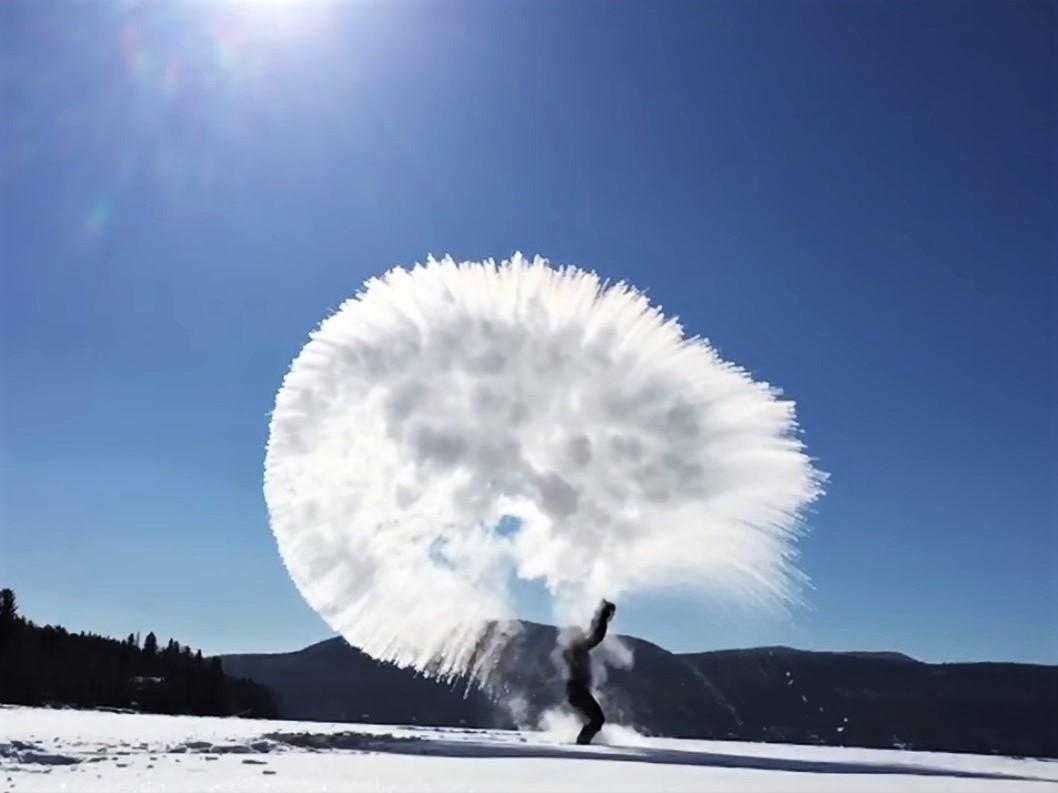
      If done correctly, the boiling water blooms into a white cloud as soon as it hits the freezing air, making it appear like it has turned instantly to snow.
      But the science behind the phenomenon shows this isn't exactly what is happening. Instead, the hot water is actually evaporating into steam, before condensing into tiny droplets of water that then freeze into a solid state.

      Essentially, the very high temperature of the water combined with the very low temperature of the air causes the water to pass through its three states almost instantaneously – from liquid to gas, then to liquid, then to solid. 

      It might sound more dramatic that the water is hot – but that makes it more likely to happen. Since the water is warmer it evaporates more quickly, allowing it to turn to steam as soon as it is thrown.
      The cold air can't hold that vapour, so almost as soon as that process happens it changes once again into droplets of liquid – which are so small that the air around them causes them to freeze instantly – and turns into a solid.

      Because the effect works with boiling water, it is dangerous for anyone who tries it. One person in Madison, Wisconsin was treated for burns after throwing scalding water into the air, local media reported.

      Hundreds of videos of the billows have been shared on Twitter and Facebook, though not all attempts have been successful.


      The experiment has even been attempted by people with high-powered water pistols.

      Temperatures need to be around -30 degrees celsius and below before the trick actually works, so it is unlikely people in the UK will be able to do it despite the current cold snap.Anyone attempting it before the mercury has reached that low risks covering themselves in boiling water.


      In freezing temperatures boiling water turns instantly to vapour when it is thrown in the air (YouTube/ Screenshot)

      One person in Madison, Wisconsin was treated for burns after throwing scalding water into the air, local media reported.

      A spate of accidents also occurred in 2014, following a similar drop in temperatures across the US.


      Asia Cold Snap

      Asia cold snap: Scores dead as freezing 'polar vortex' sweeps across eastern Asia

      By Adam Withnall, 25 January 2016 12:25

      Asia's 'polar vortex' has seen some regions hit by their coldest weather for more than half a century

      More than 60 people have died as a band of extreme cold weather spread across eastern Asia, stranding tens of thousands of tourists and bringing some regions their lowest temperatures for half a century.

      While much international attention has been focussed on the heavy snowfalls in the eastern US, another cold snap has descended over Korea, China, Hong Kong and Japan.

      Temperatures dropped across Asia on Sunday due to a deep depression pulling cold weather down from the north. Major Chinese cities like Shanghai and Beijing hit -4/-5, while -18 was recorded in Seoul, South Korea.

      Taiwan saw some of the worst impacts, however, because its subtropical geography means most homes are without central heating.

      City officials in Taipei said on Monday that temperatures had hit a 16-year low of 4C,well below the average of around 16C. The cold had caused heart trouble, shortness of breath, strokes and hypothermia and accounted for the deaths of at least 57 people in the wider city area.

      Up to 3.5 inches of snow blanketed the island’s tallest peak, Jade Mountain. Authorities warned people to keep warm out of the cold after a 56-year-old man was found dead on the street.

      In Hong Kong, a low of 3C was recorded – the lowest temperature there in almost 60 years. News headlines about Asia’s “polar vortex” saw hundreds visit mountains around the city expecting snow.

      According to the South China Morning Post, the mountains ended up covered not with snow but with underprepared hikers. Police reportedly had to block off roads up to the hills because so many people refused to heed warnings, and some had to be rescued by fire crews.

      “We came here to watch snow,” a young man said on NOW TV news. “We are a bit disappointed and freezing.”

      A sixth person was reported to have died on Monday after heavy snows left five people dead over the weekend in western and central Japan, including a woman who fell from a roof while removing snow.

      Kyodo News service and other local media reported an 88-year-old woman in western Japan's Tottori prefecture died after a landslide hit her house before dawn.
      The bullet train service was delayed, while there were flight cancellations across the country.

      In South Korea, more than 500 flights were cancelled to the internationally-renowned holiday island of Jeju, known for its year-round balmy weather and beaches.

      The mercury there hit -6C on Sunday, while heavy snow closed the airport entirely. An estimated 60,000 tourists were stranded there in total, the BBC reported, though officials said they hoped the runway would be cleared for use by Monday night.

      Most parts of mainland China experienced their coldest weather in decades over the weekend. The southern city of Guangzhou, which has a humid subtropical climate, saw snow for the first time since 1967 on Sunday, the city's meteorological service said.

      The cold led to at least four deaths — strawberry farmers who died of carbon monoxide poisoning when they turned up heating in a plastic greenhouse, the Xinhua News Agency reported.


      Polar Vortex in US


      More than 20 dead in US polar vortex, frostbite amputations feared


      NEW YORK: Tens of millions of Americans on Thursday (Jan 31) braved Arctic-like temperatures as low as -49 degrees Celsius that paralysed the US Midwest and were blamed for at least 21 deaths.

      Warmer-than-normal weather was on the way, but that offered little comfort to vulnerable populations such as the homeless and elderly enduring cold that caused frostbite in minutes and made being outside potentially deadly.

      Officials across multiple states linked numerous deaths to the frigid air. The death toll rose from a previous 12 after at least nine more people in Chicago were reported to have died from cold-related injuries, according to Stathis Poulakidas, a doctor at the city's John H Stroger Jr Hospital.


      Poulakidas, a trauma specialist, said the hospital had seen about 25 frostbite victims this week. He said the most severe cases risked having fingers and toes amputated.
      Among those believed to have died from the cold was University of Iowa student Gerard Belz. The 18-year-old was found unresponsive on campus early Wednesday morning just a short walk from his dorm, according to university officials. Police told a local television station they believed the cold played a factor in his death. The wind chill at the time officers found Belz was -46 degrees Celsius, according to the National Weather Service.


      Homeless and displaced people were particularly at risk, with Chicago and other cities setting up warming shelters. But many toughed it out in camps or vacant buildings. A 60-year-old woman found dead in an abandoned house in Lorain, Ohio, was believed to have died of hypothermia, Lorain County Coroner Stephen Evans said.

      "There’s just no way if you’re not near a heat source that you can survive for very long out in weather like this," Evans told the Chronicle-Telegram newspaper.


      15 DEGREES CELSIUS BY SATURDAY

      It has been more than 20 years since a similar blast of frigid air covered a swath of the US Midwest and Northeast, according to the National Weather Service.
      The bitter cold was caused by the mass of air known as the polar vortex drifting south from its usual position over the North Pole.

      Homes and businesses used record amounts of natural gas to fight the cold, according to financial data provider Refinitiv. Utilities appealed to consumers to conserve energy to avoid power outages.

      In Detroit, General Motors suspended operations at 11 Michigan plants to cut natural gas consumption. Fiat Chrysler Automobiles NV canceled a shift on Thursday at two of its plants.


      Snow and ice created treacherous travel conditions, with 26 road collisions reported within two hours on Thursday in eastern Iowa's Johnson County, emergency communications center chief Tom Jones told the Iowa City Press-Citizen.

      For the second day in a row, the intense cold and windy conditions forced US airlines to cancel more than 2,000 flights. Chicago was hardest hit, with O’Hare International Airport experiencing over 700 cancellations, according to the FlightAware tracking site.
      Heavy snow hitting Chicago off the Great Lakes was set to begin winding down on Thursday night, the weather service said.

      More than 30 record lows were shattered across the Midwest. Cotton, Minnesota, had the lowest national temperature recorded early on Thursday at minus -48 degrees Celsius, before the weather warmed up, the weather service reported.


      Read more at https://www.channelnewsasia.com/news/world/more-than-20-dead-in-us-polar-vortex-frostbite-amputations-11194248

      The Polar Vortex

      HOW THE POLAR VORTEX CREATED RECORD SUBZERO TEMPERATURES IN THE MIDWEST

      Some states are seeing temperatures colder than the Arctic.

      WHILE AUSTRALIANS BRACE THE HEATwaves of this year’s summer, there is no doubt that reading the winter forecasts in the United States sends a chill down our spine
      In some regions of the United States, temperatures are dropping below freezing, and some portions of the Midwest are experiencing temperatures below 40 degrees Celcius and a mind-blowing wind chill of 59 degrees below zero thanks to the polar vortex. Accuweather predicts the Midwestern states will experience the extreme temperatures until later this week and cautions against stepping outside with any exposed skin. In these record-shattering temperatures, frostbite can occur after only a few minutes.

      A BLAST OF ARCTIC AIR

      What is the polar vortex, the doomsday-sounding weather pattern blamed for these frigid conditions?
      The term refers to a swirling mass of Arctic air that hovers around the north pole all year. Its swirling eddies spin counterclockwise, and during winter months in the Northern Hemisphere, these eddies grow longer and dip farther south.
      When the vortex grows, these cold swirls of air are transported south by the polar jet stream (also called the polar front). Moving from west to east, the polar jet stream hovers farther north in the summer and farther south in the winter, altered by changing seasonal sunlight. Along with its subtropical jet stream counterpart in the south, these two fronts play a determining role in seasonal weather changes.
      Intermittent blasts of cold polar vortex air happen when the vortex becomes less stable, circulating in waves rather than a tight circle. According to the National Oceanic and Atmospheric Administration, denser cold air in the north and warm air currents moving south can all cause the vortex to become unstable. The more unstable the vortex becomes, the more likely it is that parts of North America, Europe, and Asia feel stray blasts of Arctic weather.

      WILL CLIMATE CHANGE MAKE THE VORTEX MORE UNSTABLE?

      Scientists are only recently beginning to understand how a climate changed by warming temperatures may lead to colder winters.
      One study published last March in the journal Nature Communications found a link between warmer Arctic air and colder US winters, particularly in the northeastern part of the country.
      WHAT IS THE POLAR VORTEX?
      In a press release about the research, study author Jennifer Francis said, “Warm temperatures in the Arctic cause the jet stream to take these wild swings, and when it swings farther south, that causes cold air to reach farther south. These swings tend to hang around for a while, so the weather we have in the eastern United States, whether it’s cold or warm, tends to stay with us longer.”
      One theory for why this might occur focuses on the stability of jet streams. These westerly winds are propelled by the difference between cold air in the north and warm air in the tropics. Without this strong difference, jet streams could become weaker, concluded a paper published last October.
      Though global temperatures are rising, climate change could lead to more erratic, extreme weather conditions. In parts of the Midwest and Northeast experiencing these temperature drops, the risk of hypothermia makes an unstable vortex potentially deadly.